El Chaltén Town Guide: Getting There and Trailheads
A practical guide to El Chaltén, Argentina's trekking capital: how to get there from El Calafate, where to stay, and the free trails from town.
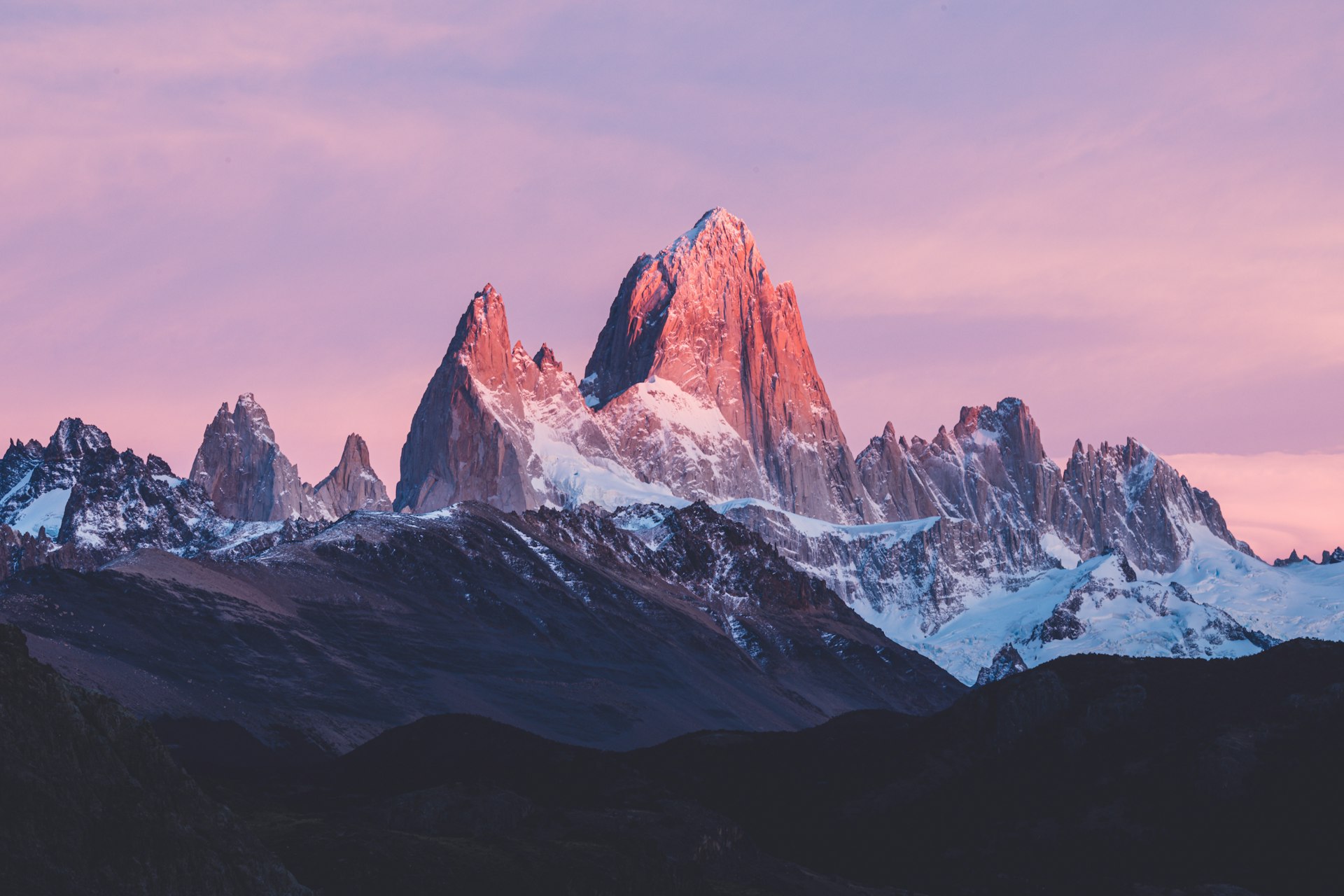
El Chaltén is a tiny town at the foot of Fitz Roy, built almost from scratch to serve one purpose: walking. Argentina calls it the national trekking capital, and the best thing about it is that you don't drive to the trails — most of them start at the end of the street, for free. Here's how to get there, where to base yourself, and what leaves from town.
The short version: three hours by bus from El Calafate, roughly six departures a day each way, and the big trails start at the edge of town. Bring cash — the single ATM is unreliable — and book beds well ahead for December to February.
Getting there
Almost everyone arrives by road from El Calafate, about three hours to the south. Regular buses run the route in summer, timed loosely around the flights into El Calafate's airport, so many people fly in and connect to a bus the same day. The drive itself is part of the trip — open steppe, then the Fitz Roy massif rising ahead. If you'd rather have your own wheels for the wider region, see our guide to renting a car in Patagonia.
Coming from Buenos Aires there is no way to fly in directly: El Chaltén has no airport, and the nearest one belongs to El Calafate. The usual routing is a flight from Aeroparque or Ezeiza down to El Calafate, three and a bit hours, and then the bus described below — book the two legs with enough slack that a delayed flight doesn’t cost you the last departure of the day. Overland from Buenos Aires is possible and long, the better part of two days on the road, and worth it only if the driving is the point. The arrival end is covered in our guide to El Calafate as a base.
The road distance is 210 km. Three operators share it — Chaltén Travel, Marga Taqsa and Cal-Tur — and between them there are departures from El Calafate at roughly 8:00, 11:00, 12:00, 14:30, 18:00 and 20:00, with returns spread across the day from 8:00 to 19:30.
Fares sit around ARS 45,000 one way, though Argentine pricing moves fast enough that the figure is a guide rather than a promise. Buy ahead in January and February; the middle-of-the-day departures fill first because they connect with the flights.
Two practical notes. The buses have satellite wifi, which matters on a three-hour run with no signal for most of it. And an 8am departure gets you into town before lunch with a whole afternoon to walk the Cóndores loop — the 18:00 costs you a day.
The town itself
El Chaltén is small — one main street (San Martín) and a scatter of lanes — but it has everything a trekker needs. A few things worth knowing before you arrive:
- Book beds early. Rooms are limited and fill fast in the December–February peak; reserve well ahead. There's a mix of hostels, cabañas and a free municipal campsite (Madsen) near the trailheads.
- Bring cash. ATMs are few and often empty, and card acceptance is patchy — arrive with Argentine pesos in hand rather than relying on withdrawing them in town.
- Eat well. For its size the food is good — Patagonian lamb, fresh bakery bread, a couple of well-loved cervecerías. Stock trail snacks at the small shops, but don't expect a big supermarket.
On the cash question specifically: there is an ATM by the bus terminal and it is the only one. It runs dry at weekends and in peak season, and withdrawal fees are steep enough that taking one large amount beats four small ones.
Arrive with pesos from El Calafate. Card acceptance has improved in the restaurants but remains patchy in the small shops, the campsite and anywhere selling bus tickets.
Beds run from roughly €20–35 a night in the hostels, which fill from December through February. There is also a free municipal campsite, and it is exactly as busy as free implies.
Trails that start from town
The point of El Chaltén is that the big hikes are self-guided — no mandatory guide, no booking, no refugio system to navigate. The trails are well signed and leave straight from the edge of town:
- Laguna de los Tres — the classic, a full day to the glacial lake right under Fitz Roy. We cover it in detail in our Laguna de los Tres trek guide.
- Laguna Torre — a gentler day out to a lake facing the needle of Cerro Torre, less climbing than Los Tres.
- Mirador de los Cóndores & de las Águilas — a short, easy loop above town with wide views over the valley — perfect for the afternoon you arrive or a weather day.
Because you can just walk out and go, El Chaltén rewards flexibility: watch the sky and hike Los Tres on the clearest morning rather than a fixed day.
Eating, and the hours that catch people out
For a town of its size the food is good — Patagonian lamb, proper bakery bread, two or three cervecerías that take beer seriously. What surprises people is the timing.
Kitchens keep Argentine hours: dinner service rarely starts before eight and the places worth queueing for do not open at all at lunch. Coming off a ten-hour hike at six with nothing open is a rite of passage here.
Stock trail food in the morning. The two small supermarkets are well enough supplied but close in the afternoon, and their shelves are visibly thinner by February.
What access now costs
This is the part that has changed, and sources disagree. For years every trail around Fitz Roy and Cerro Torre was free to walk, with no gate and no ticket, and much of what you will read online still says exactly that.
More recent reporting has the park charging a daily fee on the busier routes, in the region of AR$30,000. Whether that applies to the day you arrive, and to which trails, is not something to take on trust from a guide written last season — this one included.
Check at the visitor centre on the way in. It sits at the entrance to town, staff speak English, and five minutes there settles the question for the week you are actually there.
Multi-day permits are a separate matter and have always existed. Anything crossing onto the ice — the Viedma Glacier routes among them — needs paperwork from the same visitor centre and, in most cases, a guide.
Two or three nights is the honest minimum. One buys you a single hiking day and no margin at all, and in a place where the mountain is hidden more often than not, a spare day is the difference between seeing Fitz Roy and seeing cloud.
Before you go
One more thing about the walking: the trails are genuinely well signed, but they are also genuinely long. Laguna de los Tres is eight to ten hours round trip with a punishing final hour, and people underestimate it because there is no permit gate to make it feel official.
This is Patagonia, so the weather runs the show — sun, wind, rain and cold can all arrive in one afternoon. Pack layers with a windproof, waterproof shell, and don't count on a forecast holding. For timing the whole trip, see the best time to visit Patagonia; the town is busiest and the trails clearest from December to February, with quieter, chancier shoulders either side. Come with cash, a booked bed, and loose plans, and El Chaltén is one of the easiest great trekking bases anywhere.