Crossing the Carretera Austral in Low Season
1,240 km of gravel, ferries and empty valleys: how to drive Chile's Ruta 7 when the crowds are gone, what it costs, and when the road is open.
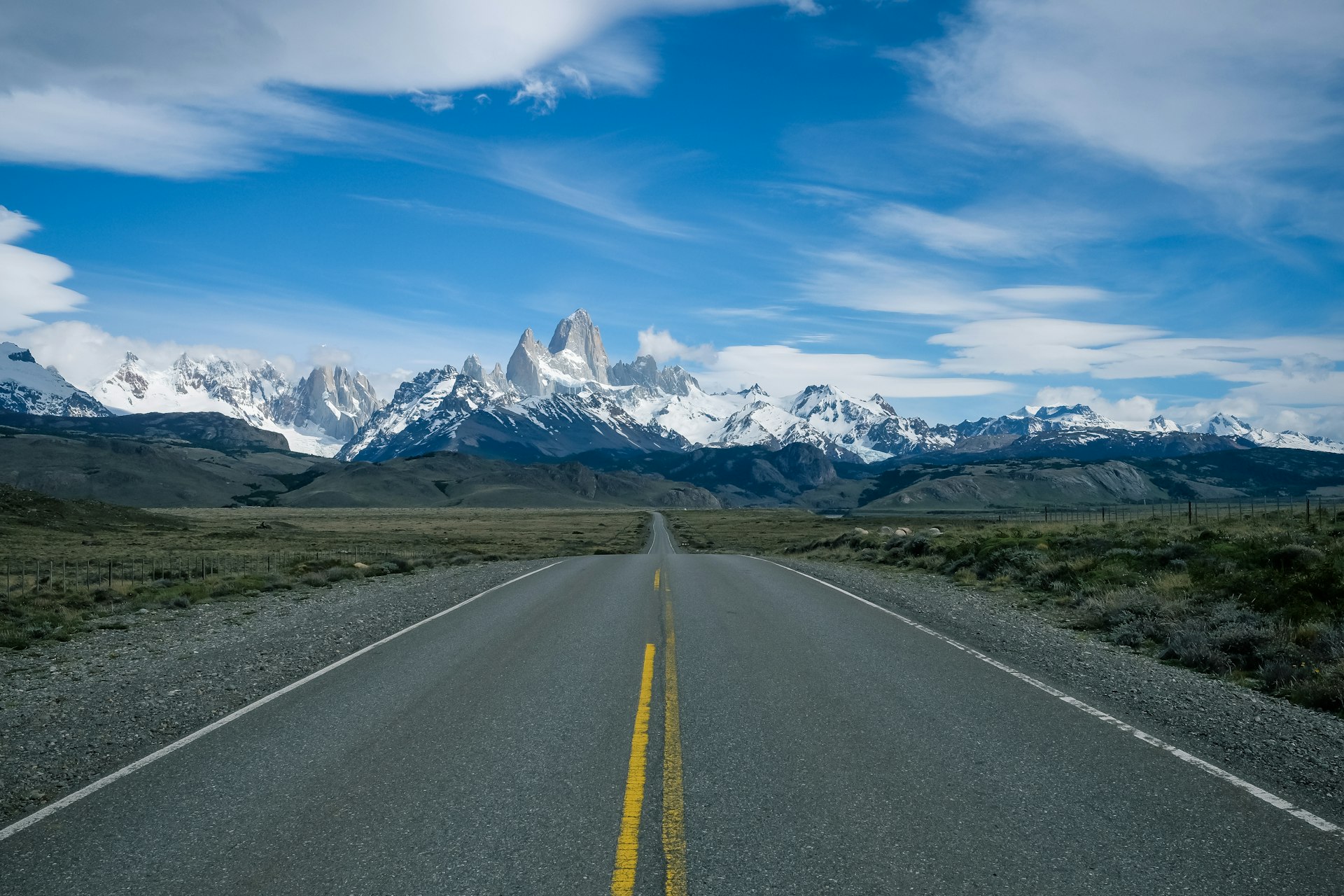
The Carretera Austral does not care whether you are ready. It begins in Puerto Montt as tidy asphalt and, somewhere past Chaitén, quietly becomes gravel, ferry timetables, and weather that rewrites your plan every morning. In low season — May through August — you trade long daylight for something better: empty road.
The short version: 1,240 km from Puerto Montt to Villa O'Higgins, part paved and part gravel, broken by ferry crossings that have to be booked and paid ahead. The Hornopirén link runs about CLP 44,300 per vehicle. Carry a full-size spare, a tyre repair kit and more fuel than the map suggests.
Why low season
The buses stop. The hitchhikers thin out. Half the hospedajes close, but the ones that stay open light a wood stove and mean it. You will drive for an hour and meet three cars. The trade-off is real — some ferries run reduced schedules, and the passes can close on short notice — but the reward is a Patagonia that feels, briefly, like it is yours.
Snow closes the high passes without much warning, and the section over Queulat is the one that shuts. Chile's road authority publishes conditions daily, and in winter that page is worth checking with breakfast rather than at the roadblock.
What the route actually is
Ruta 7 runs 1,240 km from Puerto Montt to Villa O'Higgins, where it simply stops — there is no road onward, only a boat and a footpath into Argentina.
That footpath is the celebrated back door to Argentina: a boat across Lago O'Higgins, then a rough walk or short cycle past Candelario Mansilla to the trail into El Chaltén. It is the most satisfying way to link the two ends of Patagonia — but it is strictly a summer route. The Lago O'Higgins ferry lays up from roughly April to November, so low-season drivers have no crossing here at all, and the road genuinely dead-ends. To reach Argentina in winter you backtrack north and cross at Chile Chico or, with the notarised permit, Paso Roballos. Decide your exit before you commit to driving this far south, because there is no turning the Carretera into a loop once that boat is out of the water. If Chaltén is the goal, our El Chaltén town guide picks up where the trail lands.
The character changes as you go. Asphalt as far as Chaitén and again around Coyhaique, gravel for long stretches in between and almost all the way south of Cerro Castillo. The paving creeps further every year, which is why last season's advice is unreliable.
The waypoints most people plan around are Chaitén, Futaleufú, Puyuhuapi, Coyhaique, Cerro Castillo, Puerto Río Tranquilo for the marble caves, Cochrane and finally Villa O'Higgins.
Most people drive it one way and fly out, because doubling back adds a week. Coyhaique's airport at Balmaceda is the usual escape, and one-way rental drop-offs are possible but carry a fee worth asking about before you book.
Ten days is a realistic minimum one way, two weeks if you want to stop. Driving it in five is possible and misses the point entirely.
The ferries, in order
The road is not continuous. Three water crossings interrupt it, and two of them decide whether your trip happens at all.
The first is the awkward one. Getting from Hornopirén to Caleta Gonzalo is a bimodal sequence rather than a single sailing: Hornopirén to Leptepu takes about three and a half hours, then a short unpaved drive of roughly ten kilometres to Fiordo Largo, then a second boat of about forty-five minutes into Caleta Gonzalo.
It runs at least once a day year-round and two or three times daily in summer. Reckon on CLP 44,300 for a vehicle including the driver, plus about CLP 7,400 for each extra passenger.
Booking is where people come unstuck. In January and February reserve the vehicle three weeks out, pay at least 48 hours before departure or the reservation cancels itself automatically, and be at the terminal two hours early.
There is a direct alternative from Pichicolo to Caleta Gonzalo that skips the middle drive entirely. Fewer sailings, but one boat instead of two — worth checking if the Hornopirén slots are gone.
Further south, the Puerto Yungay to Río Bravo crossing is the link to Villa O'Higgins. It is free, short, and runs to a schedule that changes with the season; miss the last one and you sleep at the slipway.
Low season has a specific meaning for the boats. Sailings drop to the winter minimum, which on the Hornopirén link means one a day rather than three, and a missed connection costs you twenty-four hours rather than four.
That cuts both ways. Fewer sailings, but also far less competition for space — the three-week booking horizon of January becomes a few days in June.
The three things that will define your trip
- Fuel discipline. Between Coyhaique and Cochrane, plan every tank. Carry 20 extra litres.
- Ferry reservations. Hornopirén in the north and Puerto Yungay in the south are non-negotiable links. Confirm them twice, and pay on time.
- Slack in the schedule. Build in one empty day for every four. You will need it, and it will become the best day.
The road teaches patience before it teaches anything else.
Fuel, and the stretches without it
Stations are thin on the ground and the gaps are where trips go wrong. The northern half is manageable; south of Coyhaique the spacing opens up and the habit has to change.
Fill at every opportunity rather than at every need. A station with fuel today may be dry tomorrow, and in low season several simply close — the one at Villa Cerro Castillo is not a plan you can rely on.
Carry twenty litres in a jerrycan. It is the difference between an inconvenience and a night spent waiting for someone to pass, and on the stretch towards Villa O'Higgins that could be a while.
Daylight is the other budget. In June the usable light runs roughly from half past nine to half past five, which on gravel is perhaps five driving hours — plan legs around that rather than around distance.
Cash matters here too. Card readers depend on a connection that often is not there, and Chilean pesos in small notes buy fuel, ferry tickets and a bed when the machine says no.
What the gravel asks of the car
Nothing exotic — but everything checked. Two full-size spares, not one. Tyres you trust. A windshield you have already made peace with losing. The famous ripio throws stones, and every driver on the Carretera has a cracked-glass story.
Mobile coverage exists in the towns and nowhere between them. Download the maps before you leave Puerto Montt, tell somebody your rough plan, and treat an offline map as equipment rather than convenience.
The tyre kit is the part people skip and regret. Two full-size spares rather than a space-saver, plus a plug kit and a compressor, because the rough sections between Cerro Castillo and Cochrane cut sidewalls and there is no one to call.
Check the rental paperwork before you commit. Not every Chilean rental permits the Carretera, several exclude gravel damage from the insurance entirely, and crossing into Argentina — for the Chile Chico or Paso Roballos routes — needs a notarised permit arranged days ahead.
Allow far more time than the distance suggests. Sixty kilometres an hour is a good average on ripio, less in rain, and the map's four hours becomes seven without anything going wrong.
For the Argentine side of the same trip, our notes on renting a car in Patagonia cover the paperwork, and the month-by-month guide explains what low season actually costs you in daylight.
If you do this once, do it slowly. The Carretera Austral is not a distance to be covered. It is a place to be outlasted.